

Painted pumpkins can be simple or seriously detailed, from quick paint-pen faces and gravity-led drips to flowers, character designs, pet portraits, and full scenes. The ideas range from easy projects for children and beginners to coordinated pumpkin groups and elaborate artwork that can carry Halloween decor through the fall season.
Halloween Painted Pumpkin Ideas for All Styles, Skill Levels, and Moods
Mistakes are easy to fix: wipe them away or paint over them. A painted pumpkin requires less blade steadiness than carving, and the design can be realistic, cartoonish, spooky, sweet, or abstract.
A painted pumpkin design can show a face, a full scene, or only blocks of color. The format depends on how much detail you want to add.
Pumpkin Set for Photography and Decor
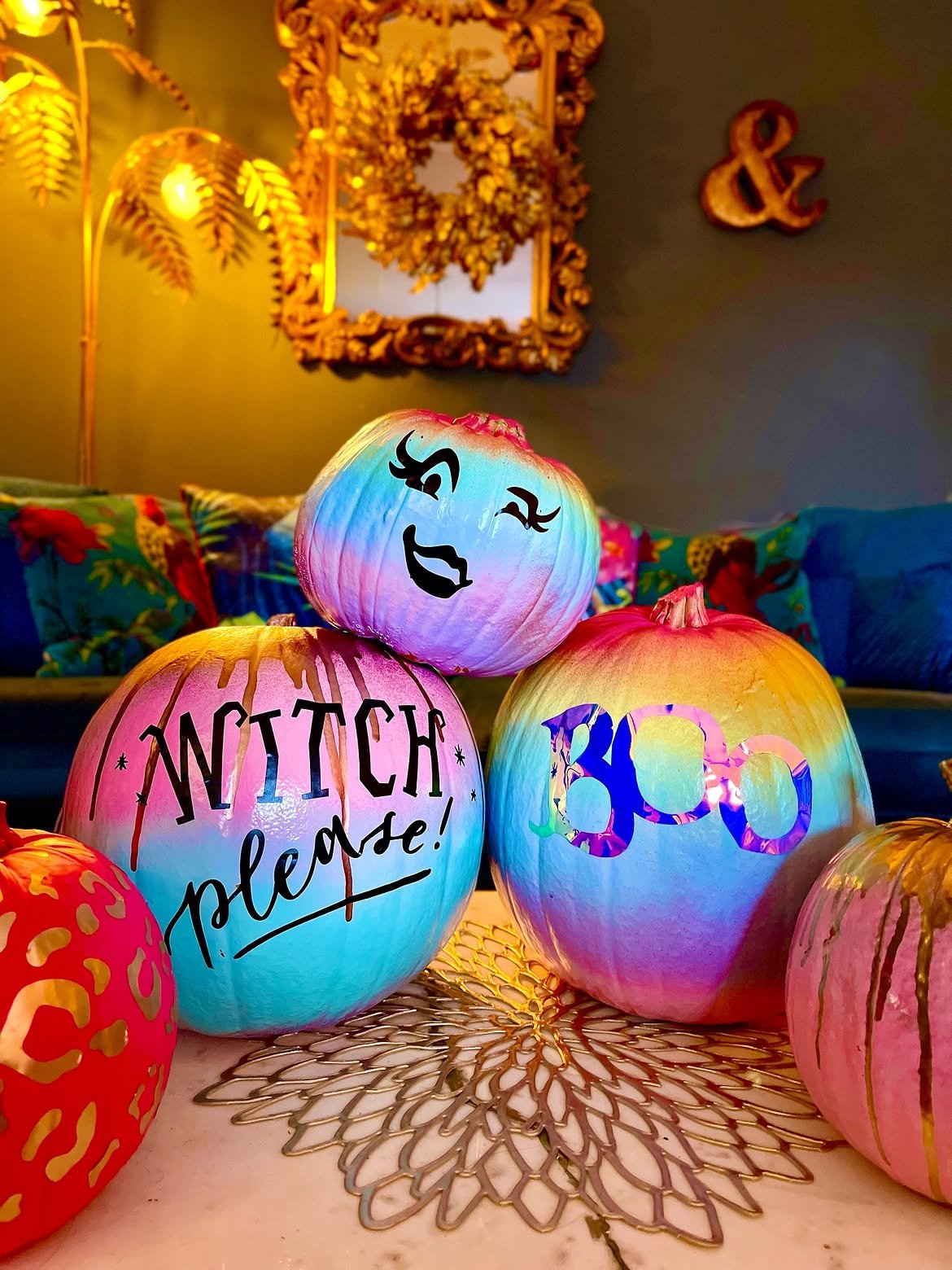
Holographic BOO lettering sits on one of the five pumpkins. The set uses a pastel ombre palette of pink, blue, and purple with an iridescent shimmer, along with a winking witch face and the words “WITCH please!” on the pumpkins.
Red-and-gold leopard print appears on another one. The shimmer changes with the direction of the light, so a pearl or interference topcoat can create a light-catching effect. Flat paint is less light-catching than a shimmer topcoat.
Large Pumpkin Bouquet
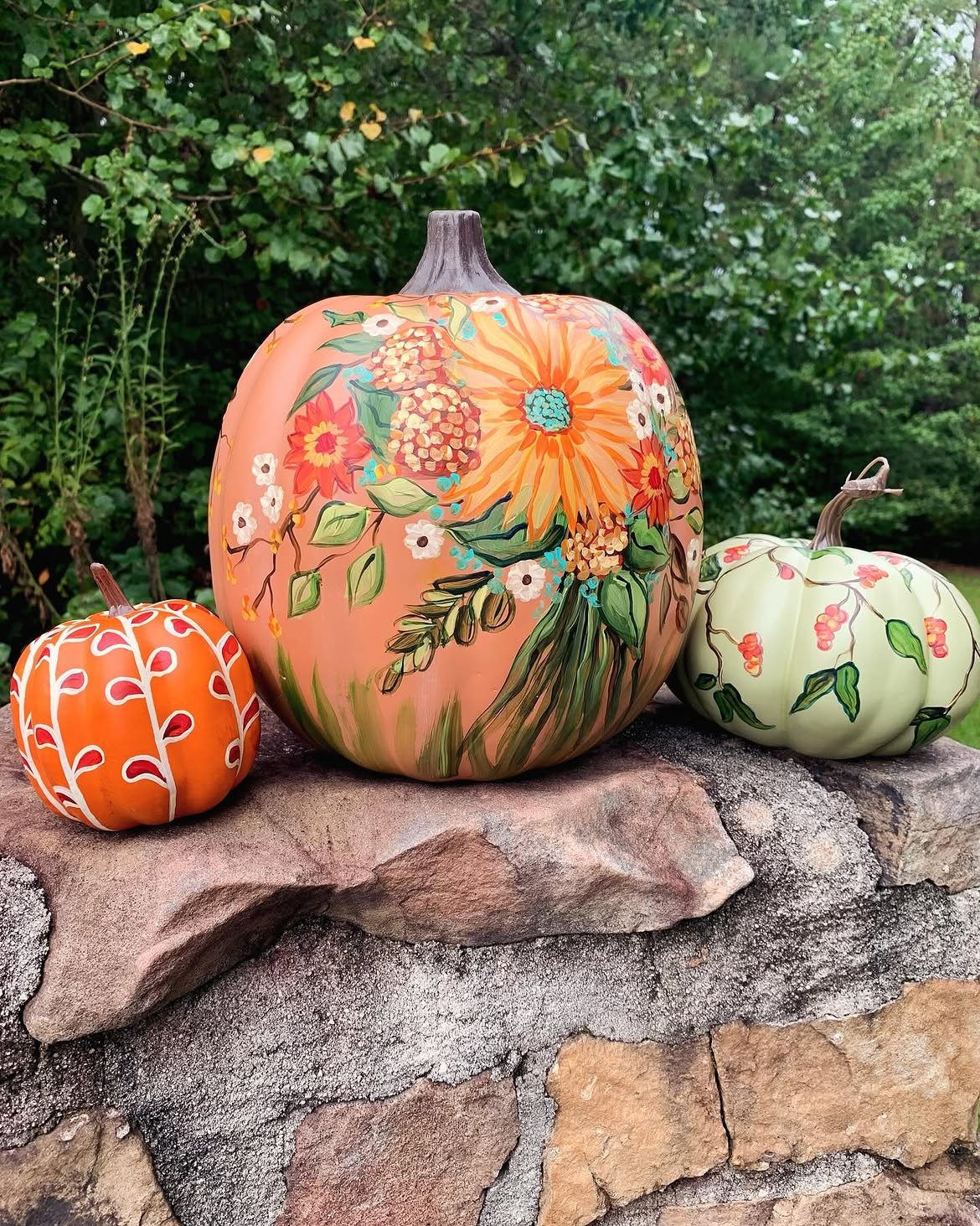
Use orange and coral blooms with trailing greenery in the floral arrangement, placing the largest pumpkin at the front. Paint the leaves and stems before adding the flowers so the painting order prevents accidental covering. Two smaller pumpkins can carry simpler vine patterns in matching tones, while a bouquet pumpkin takes more commitment than a single flower and works as a side piece rather than the centerpiece.
Beginner Pumpkin Face
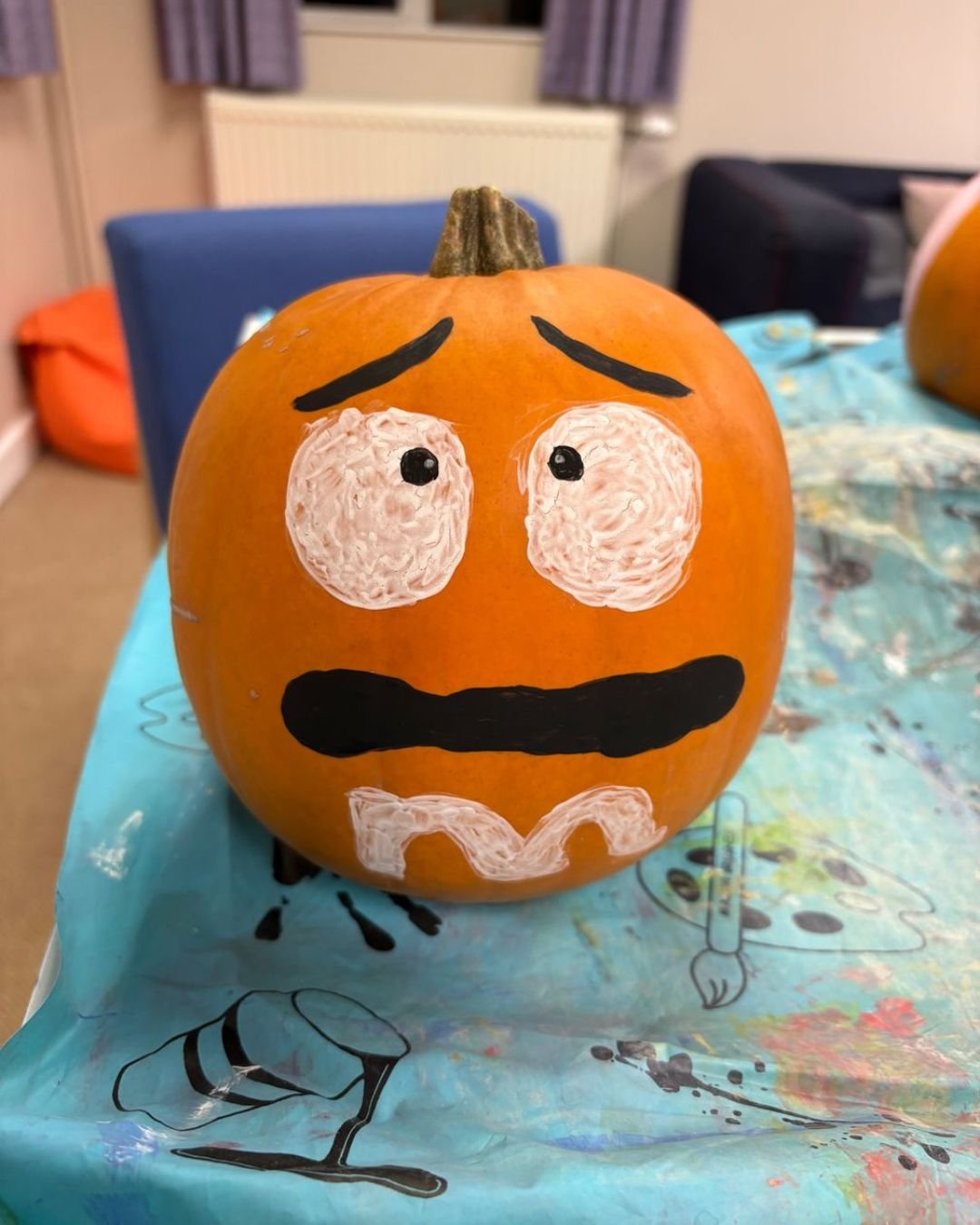
A beginner or kid can keep the face design to three or four shapes, such as eyes, brows, a mouth, and cheeks. On this orange pumpkin, two thin black eyebrows sit above a worried face, with two white circles for cheeks and a simple mouth line. Limit the detail, since an uneven face can have more personality, and the proportions do not need to be exact.
All-Ages Character Face Pumpkin
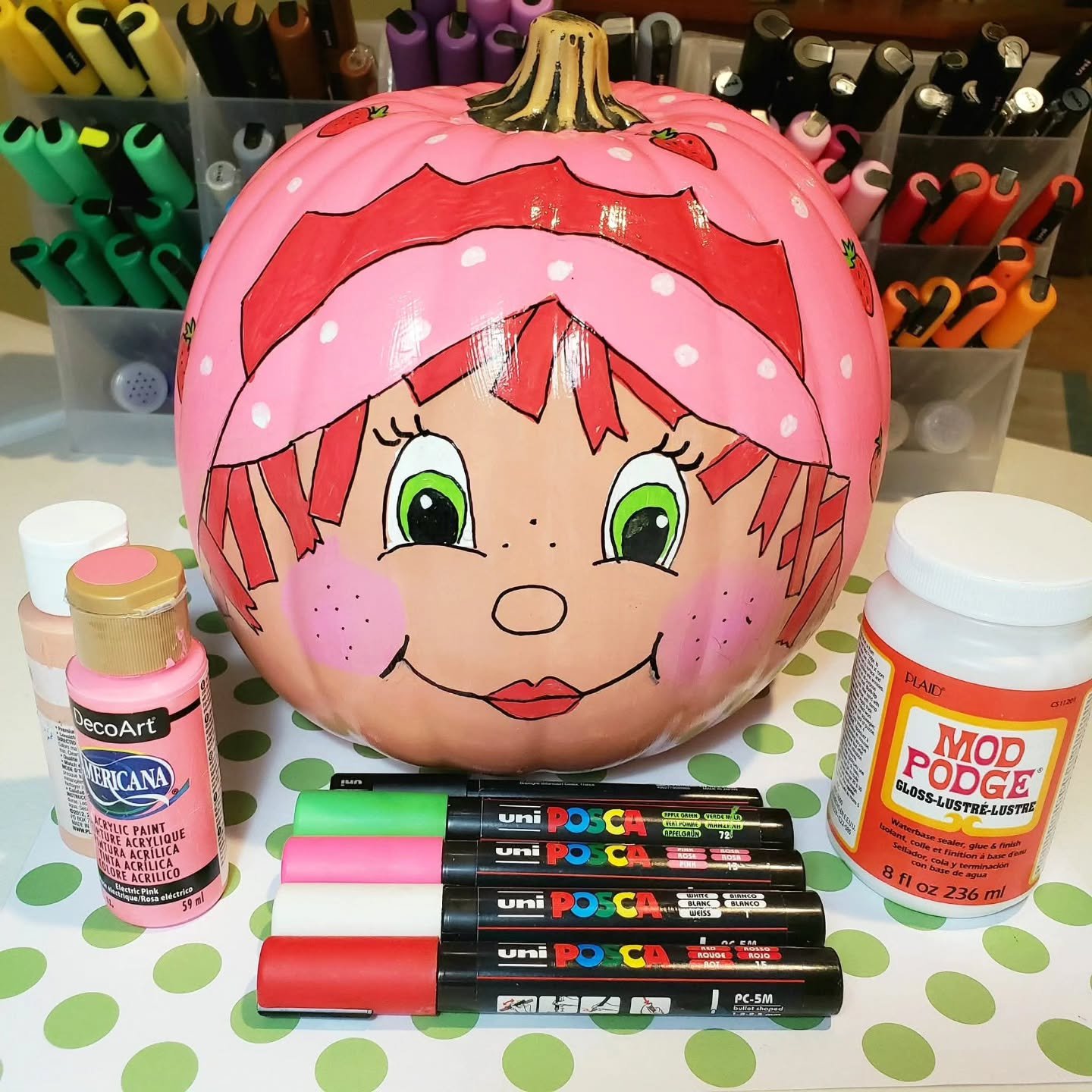
Small strawberries decorate the pink surface, while large green eyes and red yarn-style hair give the pumpkin its character. Paint pens help reduce wobbly lines and produce crisp outlines, so use them for the linework. The design avoids gore and dark themes, suits painting with children, and can be completed in one sitting.
Dog People and Sentimental Pumpkin Art
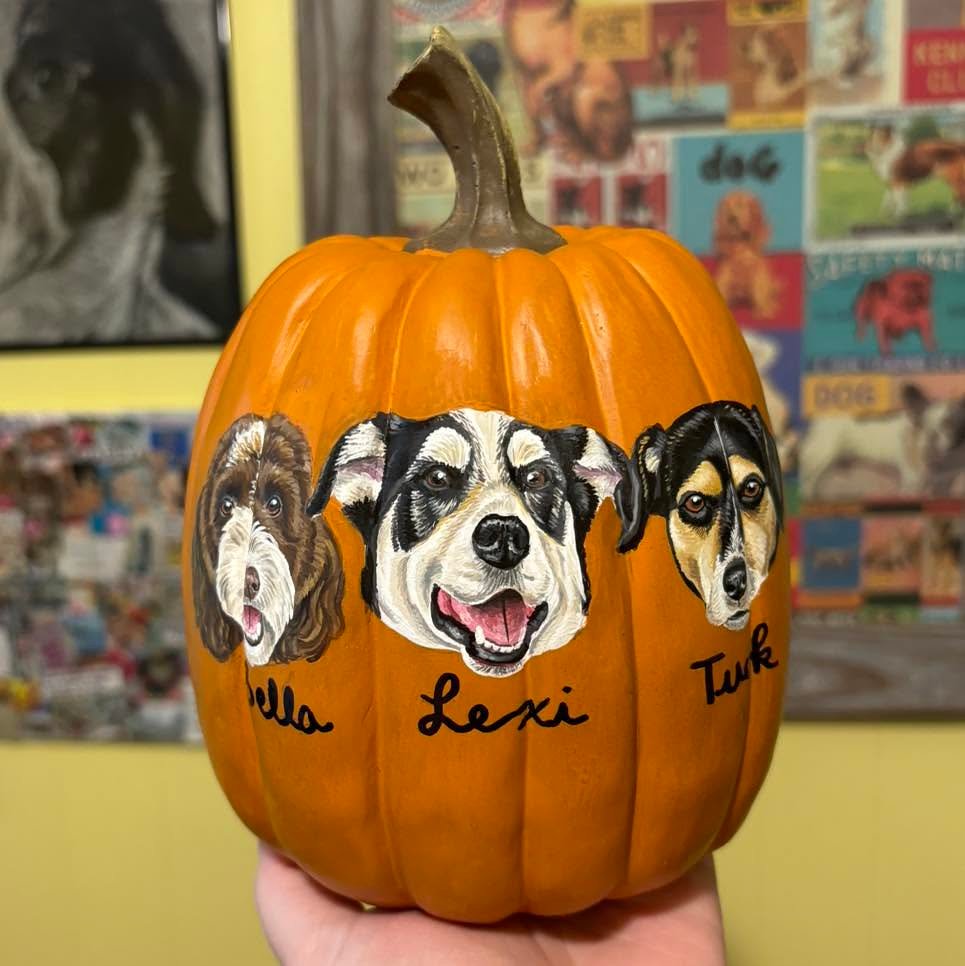
Painting skill matters when the goal is recognizable faces. In a dark room, project a pet photo onto one pumpkin, trace the outline first, and fill in the details by eye.
The surface can show realistic portraits of Turk, Bella, and Lexi, with script names beneath their faces. This option feels the most personal and works better as a keepsake than as Halloween decor.
Uncanny Clown Pumpkin
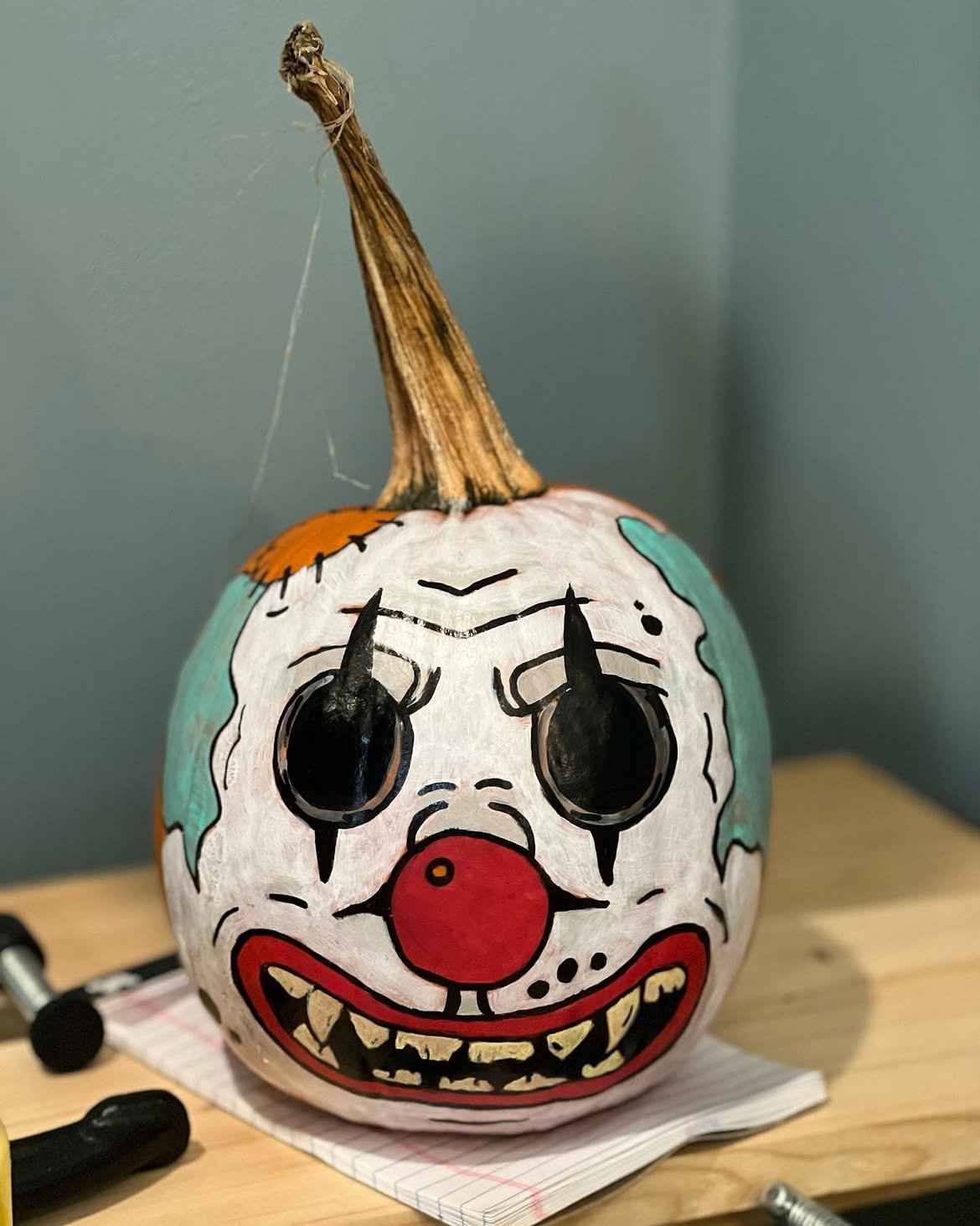
White paint gives this clown pumpkin an unsettling base, with hair colored teal and orange in uneven patches and a red nose. Add a slightly crooked smile with a gap-toothed grin, and raise one eyebrow higher than the other. The result is spooky without gore.
Artwork Pumpkin Pair
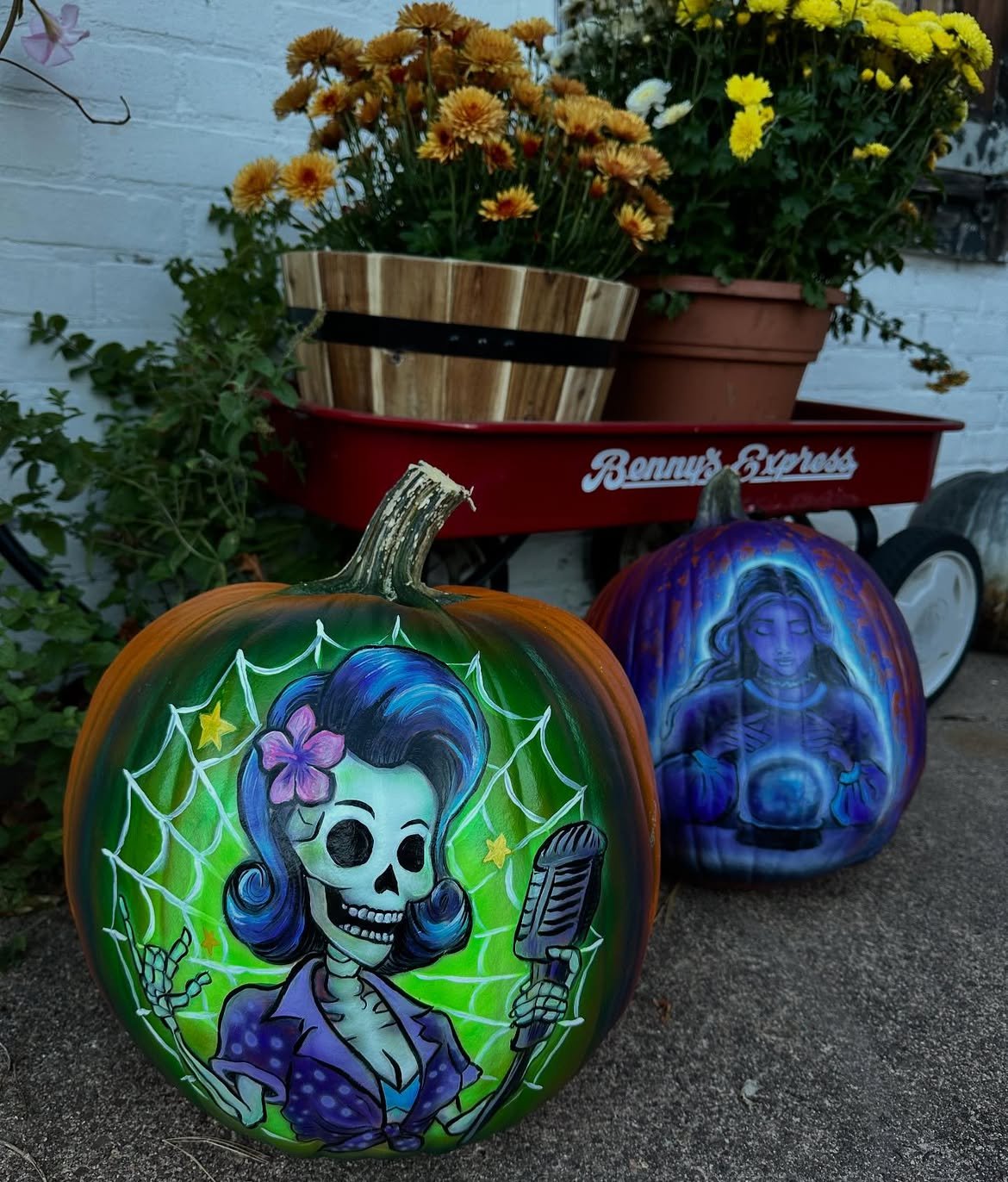
The pair includes a green pumpkin with a blue-haired skeleton singer in pin-up style, complete with a flower and vintage microphone, plus a purple fortune teller holding a glowing crystal ball. Full scenes, shading, glow effects, and other detail work make the finished artwork feel gallery-level, and the pair is closer to airbrush art than to a weekend craft project. Complex pumpkin artwork requires substantial time, so budget more time for it than for a simple face.
Soft-Faced Pumpkin
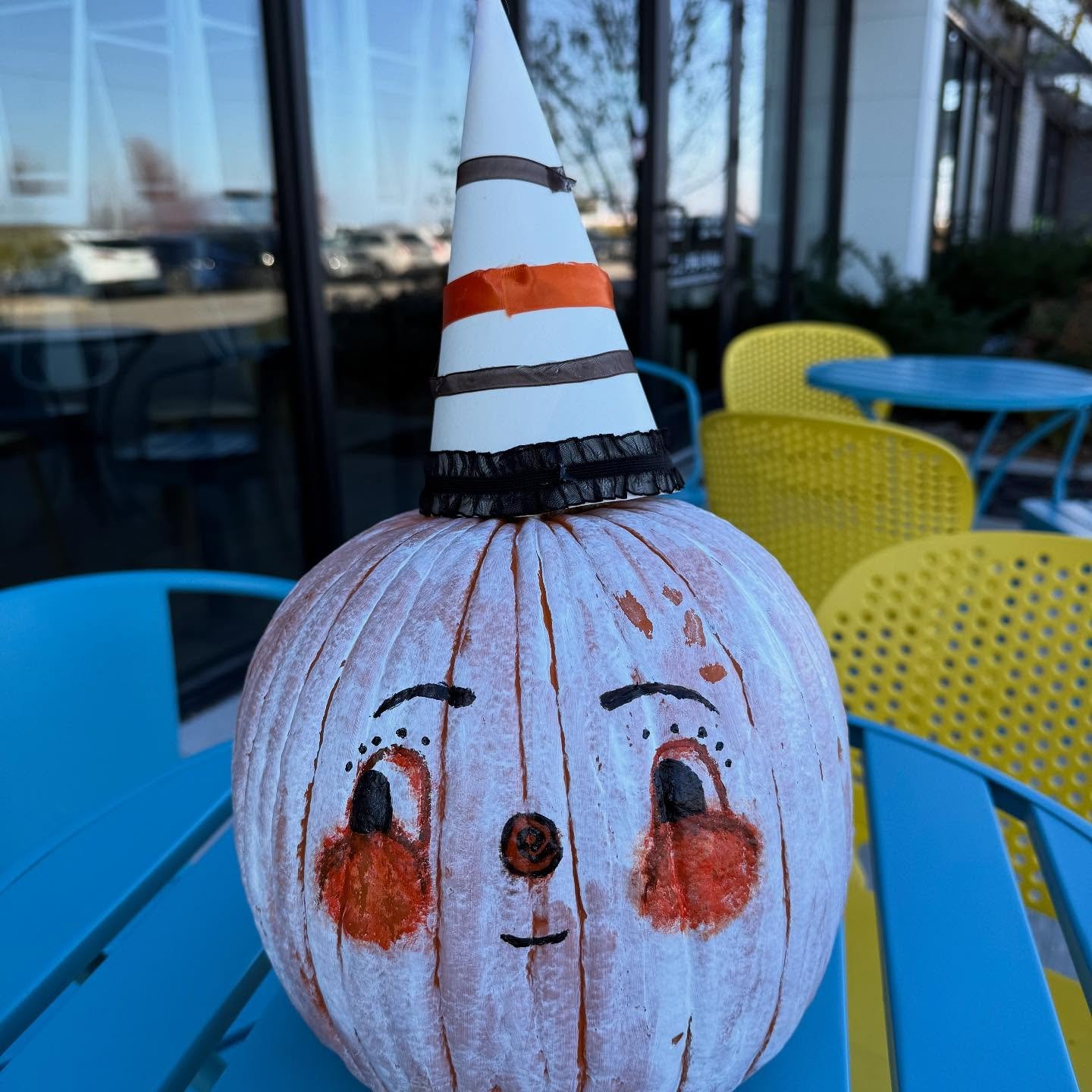
The white-washed pumpkin has a sad-sweet face, worried eyebrows, and large round blush. Dry-brush white paint instead of making the surface solid white, allowing orange patches from the underlayer to show through and create an aged appearance.
Its striped party hat has black lace around the trim. Together, these details give the pumpkin a spooky yet melancholy-cute mood.
No-Draw Pour-Paint Pumpkin
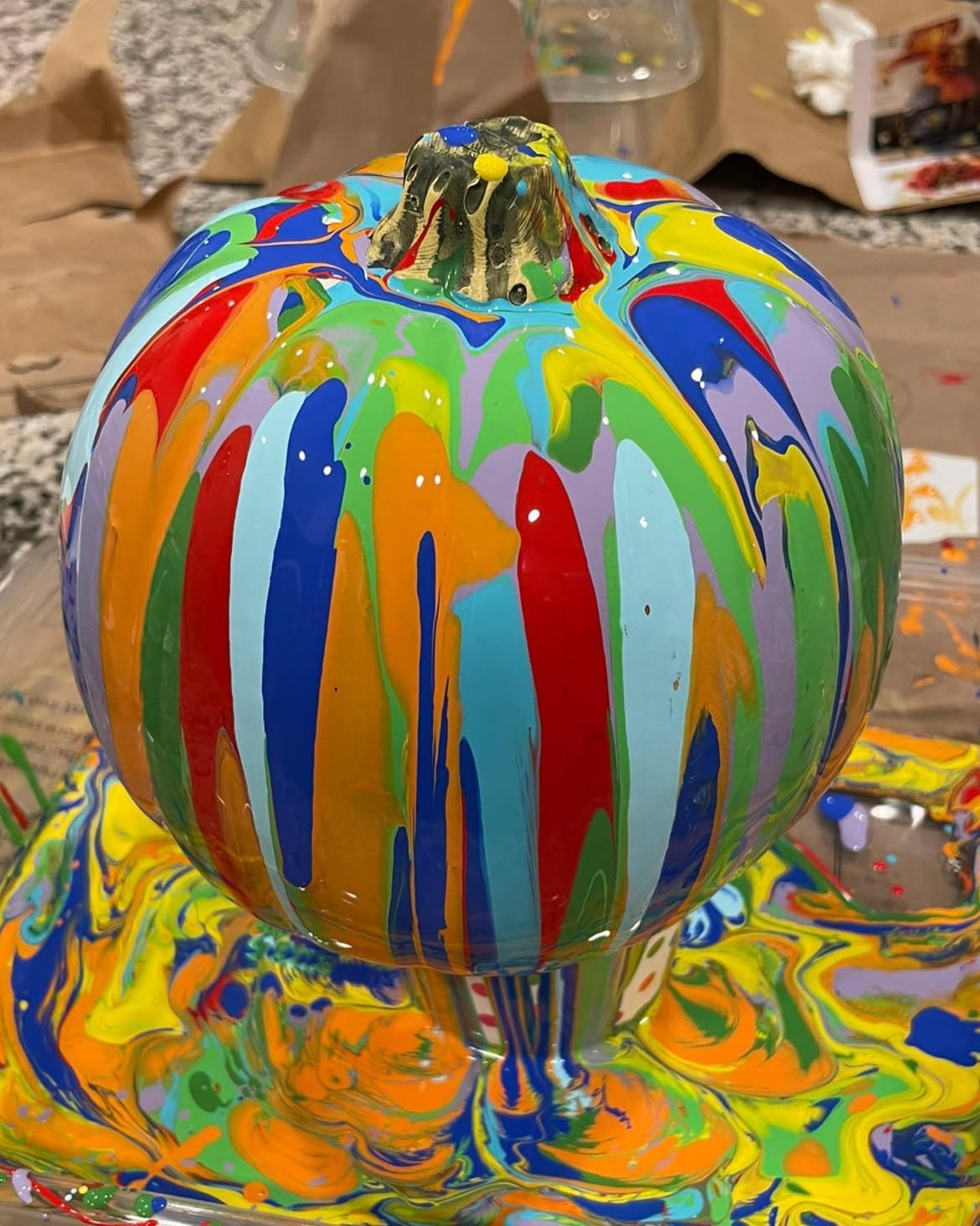
The pooled drips are less likely to collect when the pumpkin dries on its side. Tilt the pumpkin as it dries, or turn it upside down, because gravity helps the paint blend instead of letting it run into one spot.
Cover the whole pumpkin with vertical stripes and drips in red, blue, green, orange, and purple. For anyone anxious about freehand drawing, this pour-paint approach is the easiest option since it requires no drawing.
Family Pumpkin Batch
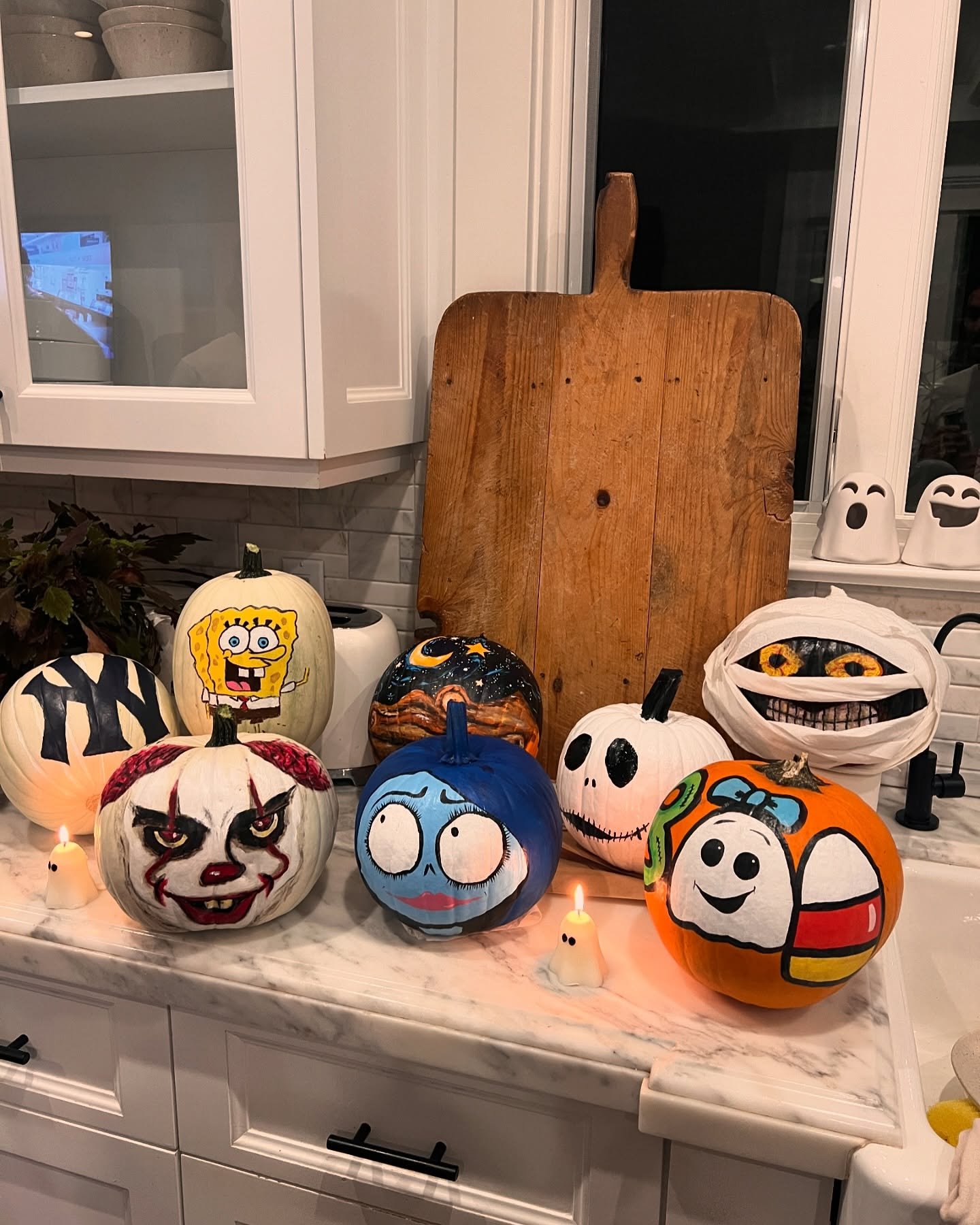
Nine character pumpkins line the kitchen counter, including SpongeBob, Pennywise, Jack Skellington, Sally from Nightmare Before Christmas, a mummy, Starry Night, Yankees pinstripes, a candy corn ghost, and one more character design.
Each participant can choose a character, while the group provides plain pumpkins in white and orange. The mismatched styles are fun to view in a lineup.
Mario Painted Pumpkin
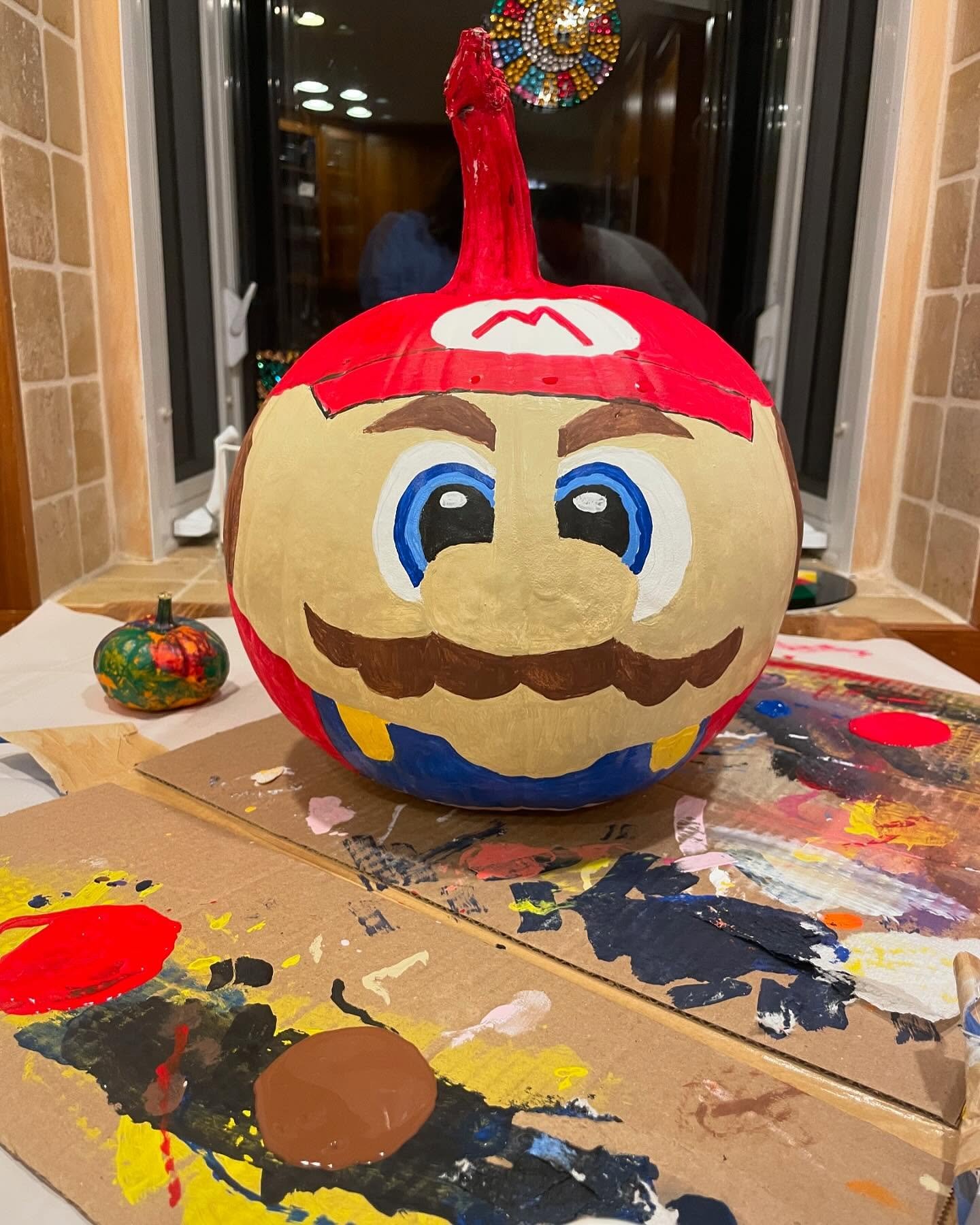
A painted Mario pumpkin can use tan and cream as its base, with a red cap, mustache, and blue eyes. Before painting, use a pencil to mark the color areas, and keep the cap line and mustache balanced on both sides. Simple graphic shapes make video-game faces, while realistic portraits are easier to trace than those shapes.
Fast Minimal Ghost Pumpkin Face
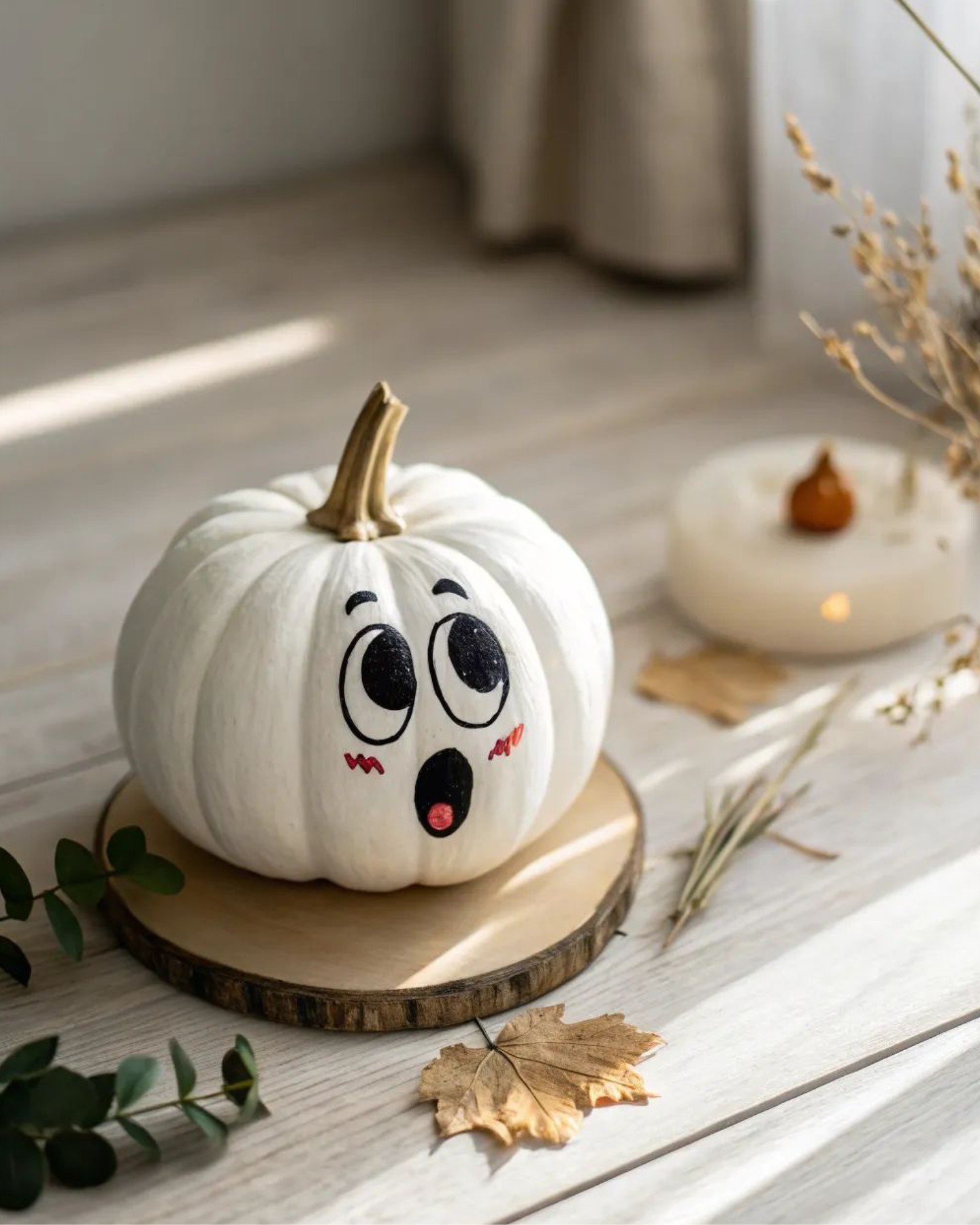
A paint pen is enough for two large black oval eyes, one small open mouth, and two red blush marks. Copy those two ovals and one mouth for a minimal ghost face that suits limited time and takes under 10 minutes to complete. It remains recognizable from across the room.
Artist Inspired Art History Crafts
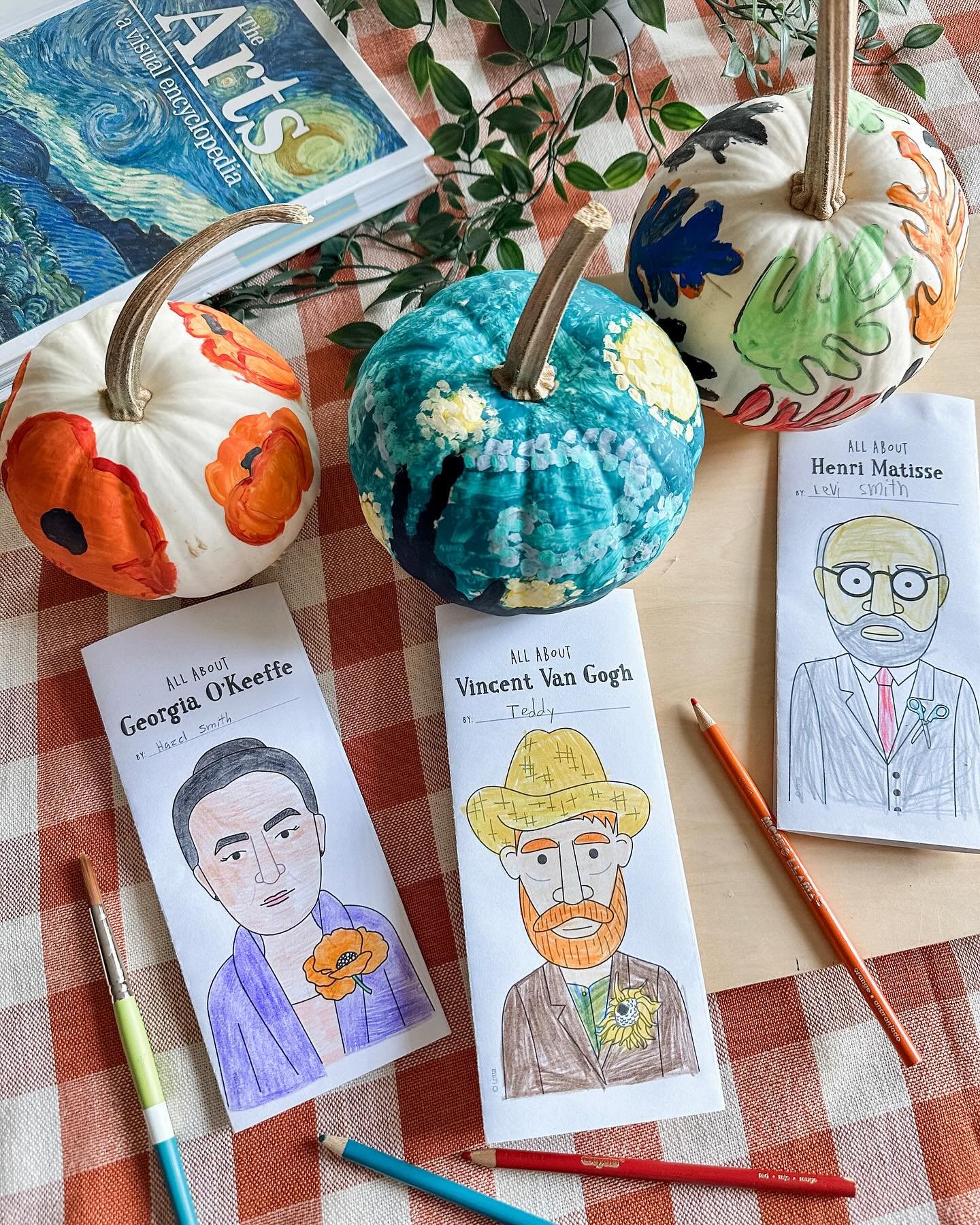
Three white pumpkins use artist-inspired designs. Instead of copying full paintings, choose one signature element from each artist: teal-and-yellow swirls from Vincent van Gogh’s Starry Night, orange poppy dots from Georgia O’Keeffe, and cutout leaves from Henri Matisse. Pair the pumpkins with a printable children’s booklet for each artist.
Fall Decor
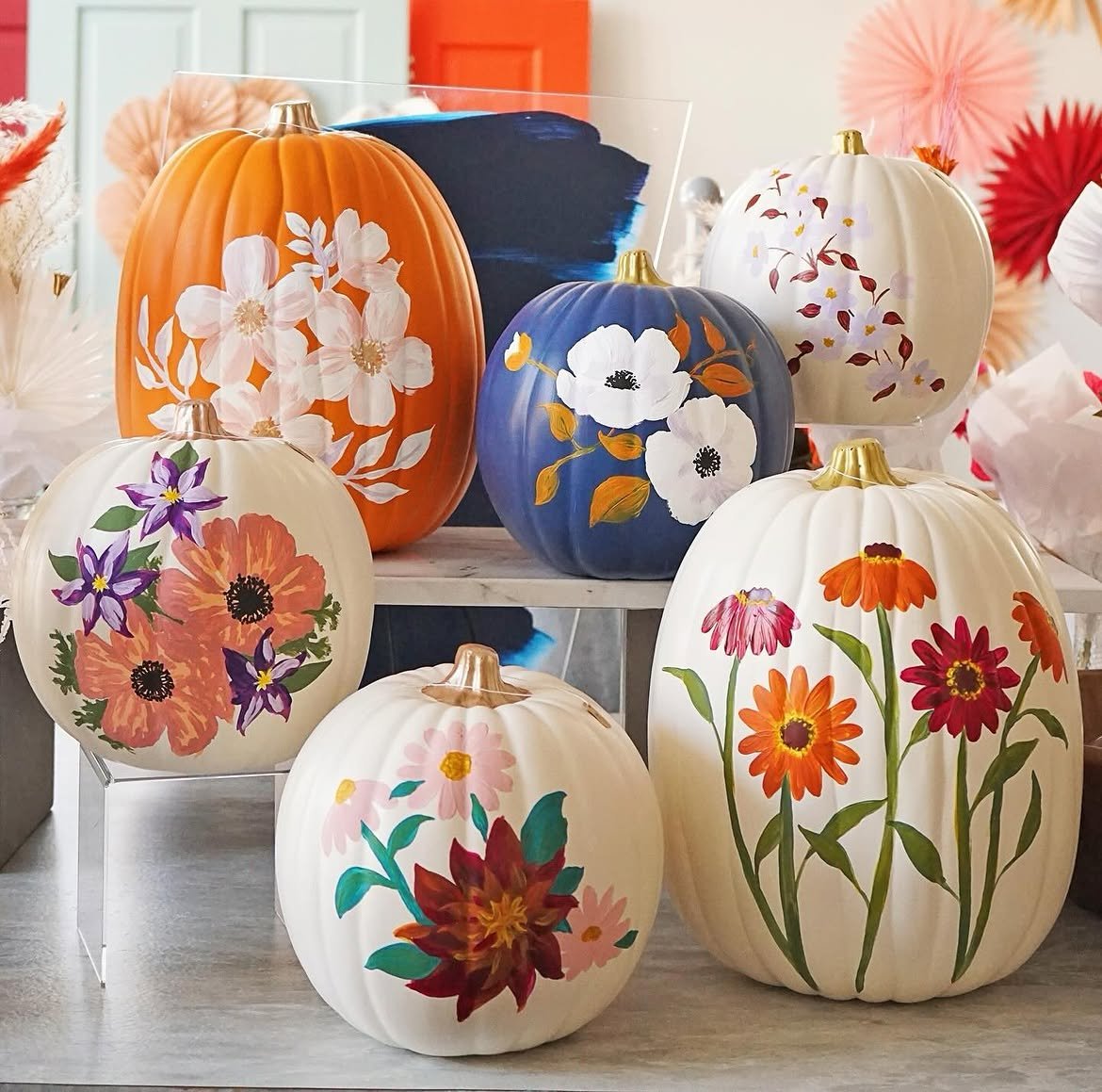
A fireplace display holds six hand-painted pumpkins in deep blue, orange, and white, giving the room decor a consistent color story that works from September until Thanksgiving. Keep the display palette narrow. The designs do not need to match, so assign one flower to each pumpkin with poppies, cherry blossoms, daisies, or small vines.
Pattern Based Pumpkin Group
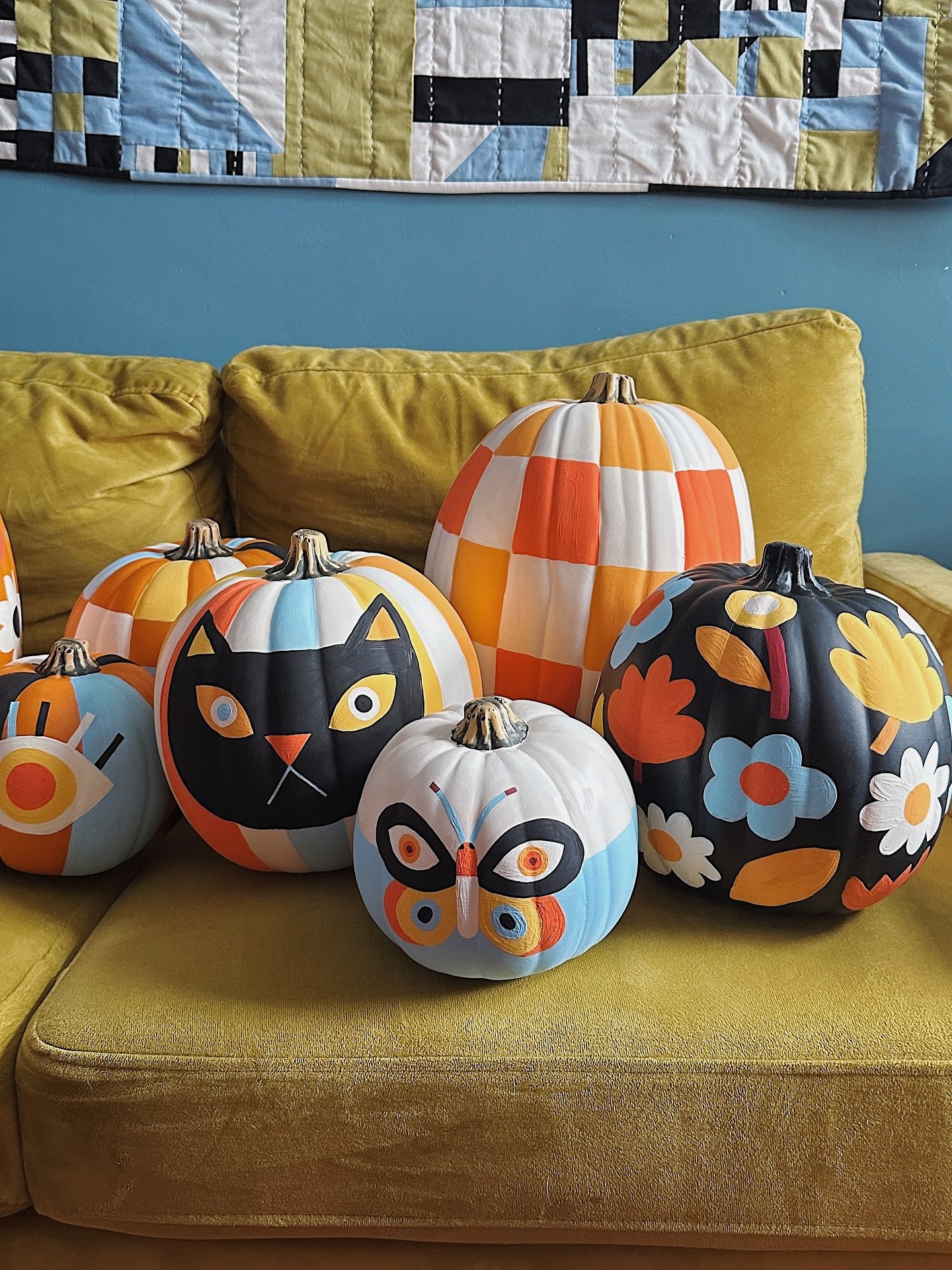
Make a coordinated group rather than a thrown-together group. These six pattern-based pumpkins use a living-room palette of black, orange, white, and blue, with designs including daisies on a black background, a butterfly, a checkerboard pattern, a black cat face, and striped eyes. Limit the pumpkin colors to two or three colors so the decor stays consistent and coordinates with fall decor.
Non-Carved Scary Pumpkin
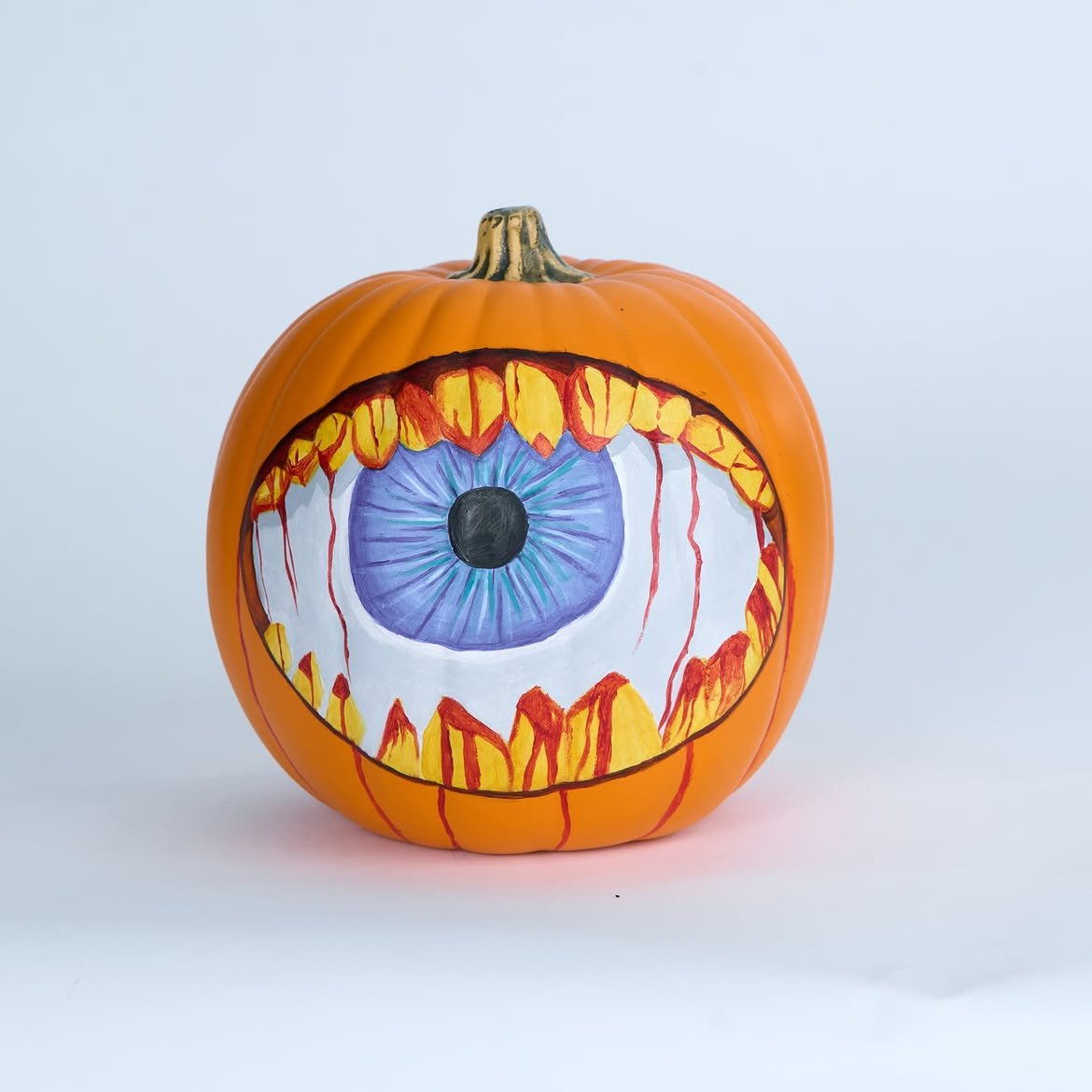
Avoid the knife with a painted pumpkin design built around a giant bloodshot eye. Jagged yellow shapes resembling teeth ring the eye, and red drips run down the pumpkin with a bleeding appearance. The result has a scary theme without requiring any carving.
Costume-Inspired Pumpkins
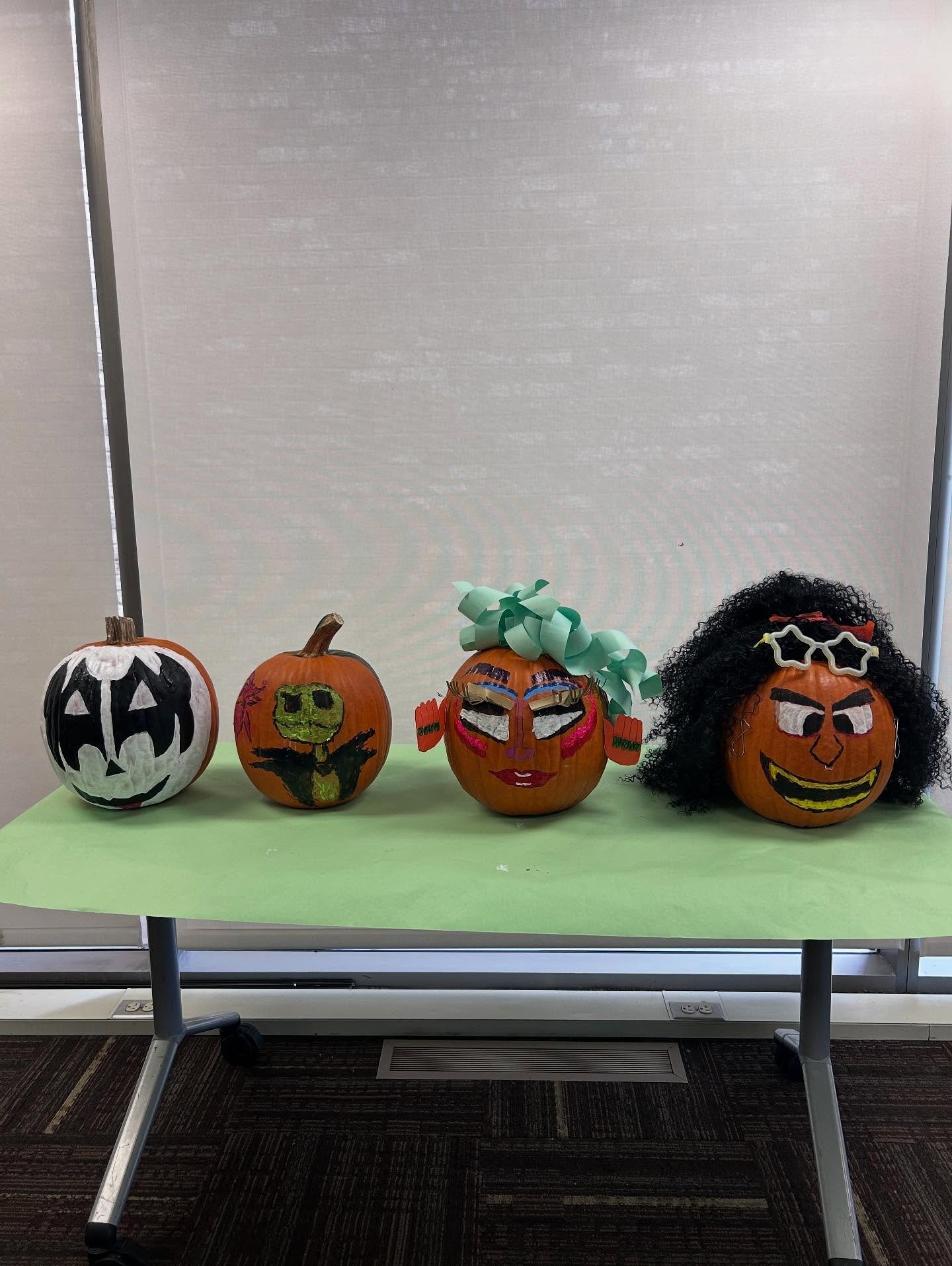
These pumpkins are treated like tiny mannequins, with real costume props placed over the paint. One has a KISS-style face, another is a green zombie figure, and a glam face has paper curls for hair.
A curly wig and star glasses finish another pumpkin. Reuse leftover costume props from past years, such as wigs and glasses, and let the painted designs extend the real props.
Children’s Name Halloween Pumpkins
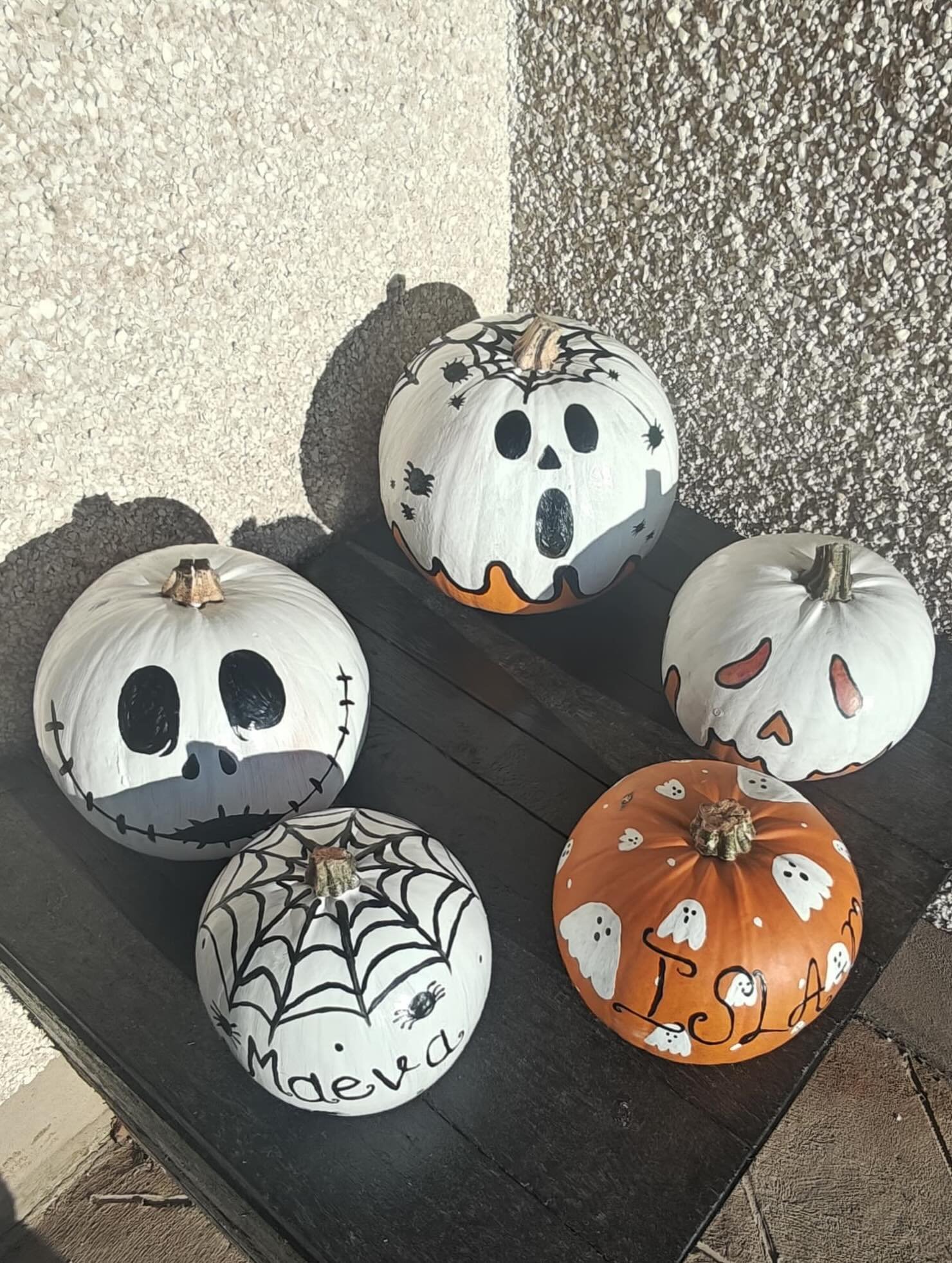
One ghost has pink cheeks, and another appears in a dripping form with a spiderweb. The set has five white pumpkins, including a stitched-face Jack Skellington and two designs that place the children’s names Maeva and Isla in spiderweb and ghost artwork. Check the letter spacing, then use a pencil to block out the letters before applying a paint pen; the full-face drawing needs no name personalization, while adding a name changes a generic Halloween pumpkin.
